
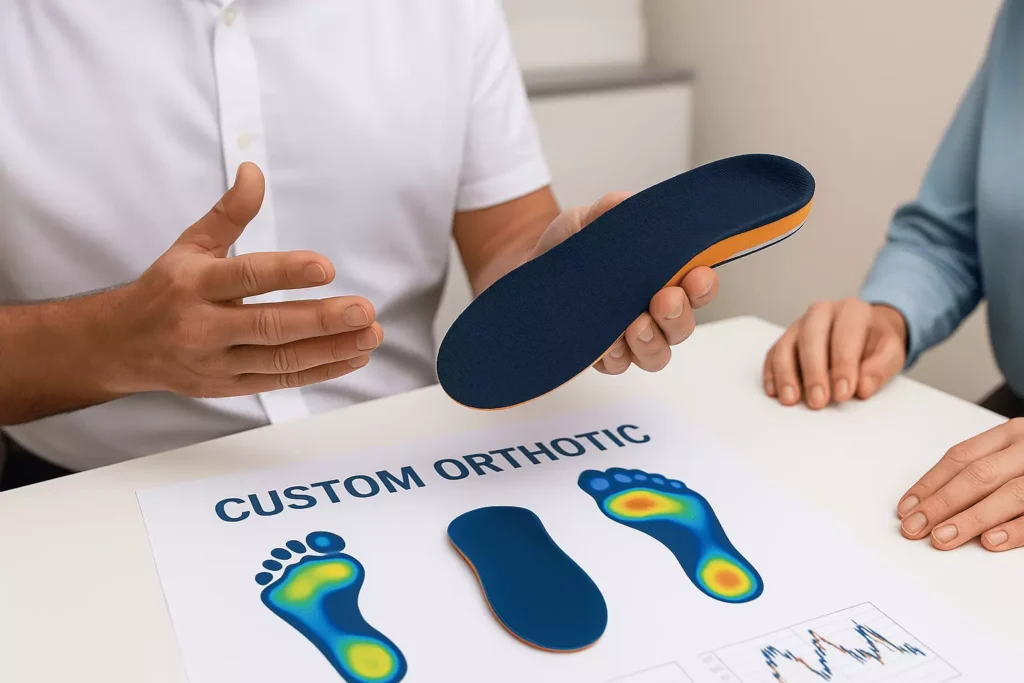
Orthotics are medical devices that are worn inside shoes to correct foot and ankle problems. These inserts address conditions like flat feet, high arches, plantar fasciitis, and gait abnormalities. Different types of orthotics serve different purposes, so understanding your options helps you select the most appropriate solution for your needs. Here is more information about shoe inserts and what they can do:
What Are Foot Orthotics?
Foot orthotics are inserts that are placed inside shoes to provide support and correction for various foot conditions. These devices redistribute pressure across the foot and help align the lower limbs during walking or standing. Over-the-counter versions offer general support; custom options provide tailored corrections based on your specific foot structure and condition.
Orthotics can be rigid, semi-rigid, or soft depending on the condition being treated. Rigid inserts are typically made from materials like carbon fiber or plastic, and they control motion in the foot joints. Semi-rigid orthotics combine softer materials with rigid components to balance support and flexibility. Soft inserts provide cushioning and accommodate foot deformities, which makes them suitable for diabetic patients or those with arthritis.
What Are Ankle-foot Orthotics?
Ankle-foot orthotics extend beyond the foot to support the ankle and lower leg. Medical professionals prescribe AFOs for patients with weakness, instability, or paralysis that affects the ankle and foot muscles. Conditions like cerebral palsy and stroke often require AFO support, and muscular dystrophy can as well.
AFOs control the position and motion of the ankle during walking. They help prevent foot drop, a condition where weakness prevents lifting the front part of the foot. These inserts stabilize the ankle joint, and they improve gait patterns and reduce fall risk. AFOs come in various designs, from lightweight plastic models to more complex articulated systems that allow controlled ankle movement while preventing excessive motion.
What Are Custom Orthotics?
Custom orthotics are prescription devices created from molds or scans of your feet. A healthcare provider evaluates your foot structure, gait pattern, and specific condition, then they design inserts tailored to your needs. This personalized approach addresses biomechanical issues that generic inserts cannot correct.
The customization process begins with a thorough examination and often includes gait analysis; your provider may use foam impressions, plaster casts, or digital scanning technology to capture precise foot measurements. These measurements guide the fabrication process, resulting in inserts that match your foot contours exactly. Custom inserts can address complex conditions like severe overpronation, supination, leg length discrepancies, and structural deformities.
What Are Common Indicators?
Several symptoms indicate that orthotics might help improve your foot health and comfort:
- Persistent heel pain, typically from the condition called plantar fasciitis
- Arch pain or fallen arches that cause discomfort during standing or walking
- Pain in your ankles, knees, hips, or lower back that worsens with activity
- Uneven shoe wear patterns that indicate gait abnormalities
Foot fatigue after standing or walking for short periods suggests inadequate support, and orthotics may offer the support you need. Visible foot deformities like bunions or hammertoes may also benefit from orthotic intervention. If you have diabetes, regular orthotic use can prevent complications by reducing pressure points and protecting vulnerable areas of your feet.
Learn More About Custom Orthotics
Orthotics provide effective solutions for numerous foot and ankle conditions. Foot orthotics address alignment and support issues, and ankle-foot orthotics assist with more severe mobility limitations. Custom options offer precise corrections tailored to your specific needs, though the appropriate choice depends on your condition, activity level, and treatment goals. If you want to learn more about orthotics and the different benefits they have, then consult a foot and ankle specialist near you.