
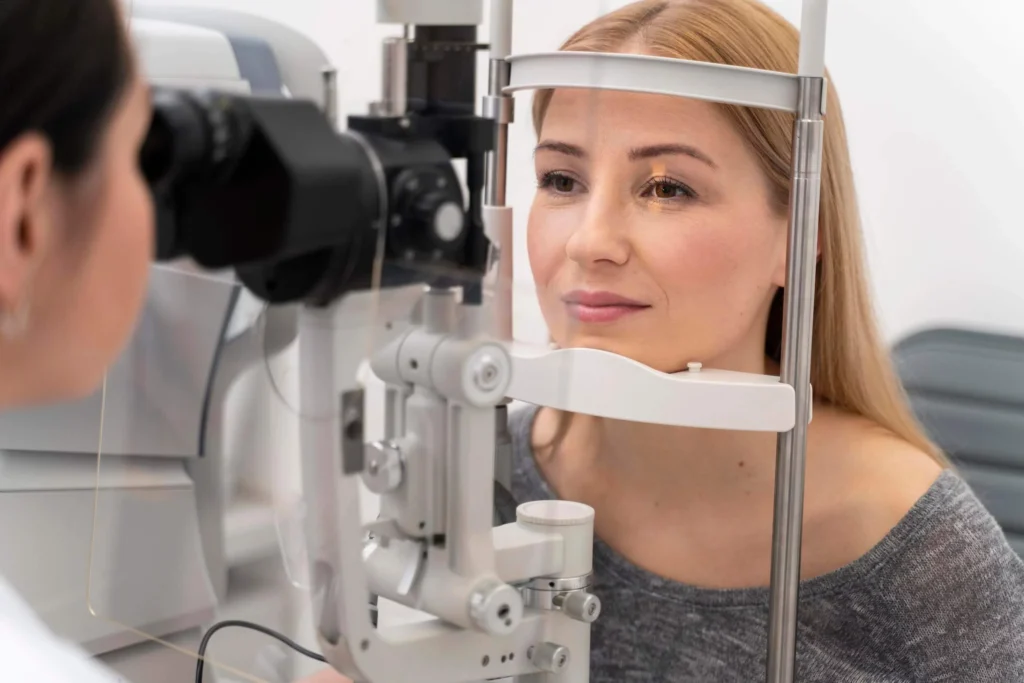
Laser vision correction is a surgical procedure intended to reduce a person’s dependency on glasses or contact lenses. The procedure uses a laser to reshape the cornea, which is the clear, front part of the eye. Understanding the process from start to finish can help you prepare for the procedure and subsequent recovery period; this guide provides a straightforward overview of what to anticipate.
Procedure
The laser vision correction process is typically brief. Knowing what happens during and immediately after the procedure can help manage expectations. The surgery itself usually takes just a few minutes for each eye, and you can expect your time in the treatment room to be short but carefully managed by the clinical team. Because each step in the process is significant, understanding what will happen helps you be prepared.
During
During the procedure, your eye specialist will use numbing drops to help your comfort. Your eye specialist will use an instrument to hold your eyelids open to prevent blinking. You will be asked to focus on a target light while the laser reshapes your cornea, and the laser portion of the procedure often lasts less than a minute for each eye. Noticing a particular smell or hearing a clicking sound from the laser is normal.
After
You may notice your vision is blurry or hazy once the procedure is complete. It is common to experience some mild discomfort, such as a gritty or watery sensation in the eyes. Your eye specialist will likely examine your eyes before you are permitted to go home. You will be provided with protective eye shields to wear, especially while sleeping, and you will need someone to drive you home.
Recovery
The recovery phase begins as soon as the procedure ends. Your vision will gradually improve over the following days and weeks. During this period, it is recommended to give your eyes adequate rest and avoid rubbing them, as this can interfere with healing. Strenuous activities, swimming, and environments with dust or smoke should be avoided to reduce the risk of irritation or infection. Follow all post-operative instructions provided by your specialist, and use prescribed eye drops to aid the healing process. Attending all scheduled follow-up appointments allows your eye specialist to monitor your progress and address any concerns early on. While individual experiences vary, many people report significant improvement in their vision within 24 to 48 hours.
Stabilization After Laser Vision Correction
Vision stabilization is a gradual process that continues for several weeks or even months after the procedure. During this time, it is normal to experience fluctuations in your vision, so you should attend all follow-up appointments. These check-ups allow your eye specialist to monitor your healing progress and confirm your eyes are stabilizing as expected. Most patients find their vision stabilizes within three to six months, and they can fully appreciate the results of the procedure.
Ask an Eye Specialist Today
This guide provides a general outline of what to expect, but your experience may differ. Consult with a qualified eye specialist to determine if laser vision correction is a suitable option for you. While evaluating your specific eye health, a specialist can also answer any questions you have about the procedure, recovery, and potential outcomes.