
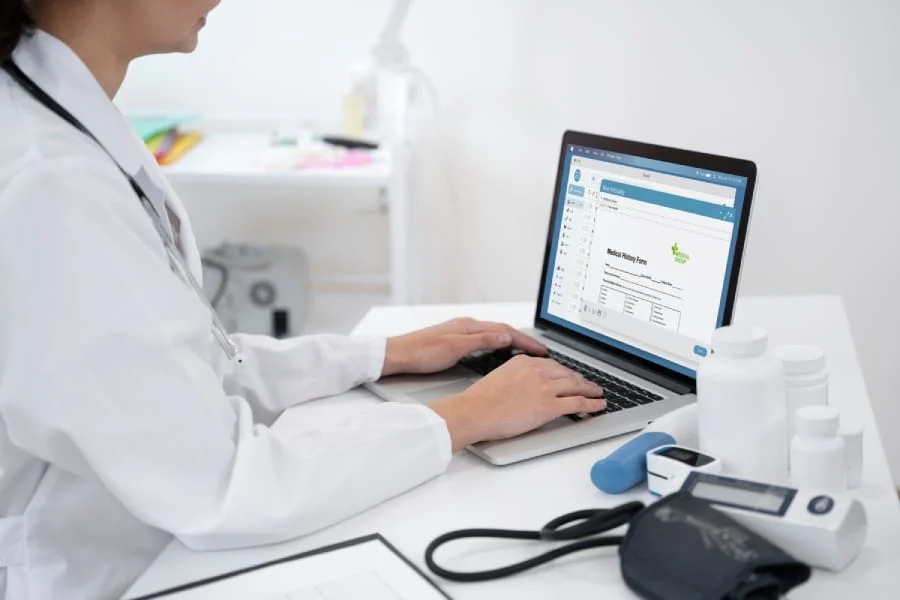
As a healthcare provider, you manage sensitive patient data daily, including medical histories, lab results, and billing information, which requires secure and accurate digital solutions. Patient records and insurance information generate large volumes of data that must be securely stored and easily accessible. An EMR service provides a centralized digital platform for storing, organizing, and accessing patient and administrative information efficiently and securely. Here are the value propositions of EMR services for healthcare providers:
Enhanced Data Accuracy
When you rely on paper-based records, there is a likelihood of missing information, either due to error or illegible handwriting. This may lead to delays in patient care and even potential health risks. An inconsistent and incomplete collection of data results in inaccurate medical histories, diagnoses, and treatments. With EMR services, you prevent data inconsistencies, which helps increase the accuracy of patient records. The electronic system enables you to automate data entry, reducing errors that occur during manual input. Automatic prompts and alerts for missing or incorrect information help verify complete and accurate documentation of patient records.
Streamlined Clinic Workflows
Your healthcare facility may have different departments and various providers handling patient care. With EMR technology, all the information is stored in one centralized location accessible to authorized personnel. You can track and monitor patient records, laboratory results, and medication orders within the system. This streamlined workflow improves collaboration among different departments, reducing the risk of duplicate entries.
With secure EMR access, authorized staff retrieve patient information within the facility or remotely, depending on the system’s configuration. It eliminates the need for physical chart pulls and reduces wait times for patients; this leads to more efficient, timely care delivery in your facility. Implementing an EMR system enhances care quality by providing accurate and up-to-date patient information for clinical decision-making.
Improved Compliance Standards
Healthcare providers must comply with regulations such as HIPAA to protect patient privacy and maintain secure records. An EMR system supports compliance by safeguarding patient confidentiality, securing data access, and maintaining comprehensive audit trails. It is possible to track who accessed a patient’s records and when. Your facility also maintains compliance by verifying that patient data is only accessible to authorized personnel.
An EHR system also helps with regulatory reporting. With the ability to generate reports in real time, you can submit required data to authorities and meet necessary deadlines. This eliminates the tedious process of manually compiling and verifying information, reducing the risk of errors or missed deadlines.
Personalized Staff Training
When you equip your staff with the right technology, you help them provide better patient care. The EHR training sessions can be tailored to meet your staff’s needs, whether they are new to the system or well-versed in it. This individual training framework helps in the efficient and effective deployment of the EHR system in patient care. The right training makes the process of data migration easier. Training staff to accurately migrate data from paper records to the EMR system reduces errors and offers complete patient information.
Invest in EMR Services
Managing patient data is simplified by investing in EMR services. These services provide support for the ongoing maintenance and management of your electronic health records. Consult with an EMR service provider to explore solutions tailored to your practice for secure, accurate, and efficient patient data management.